


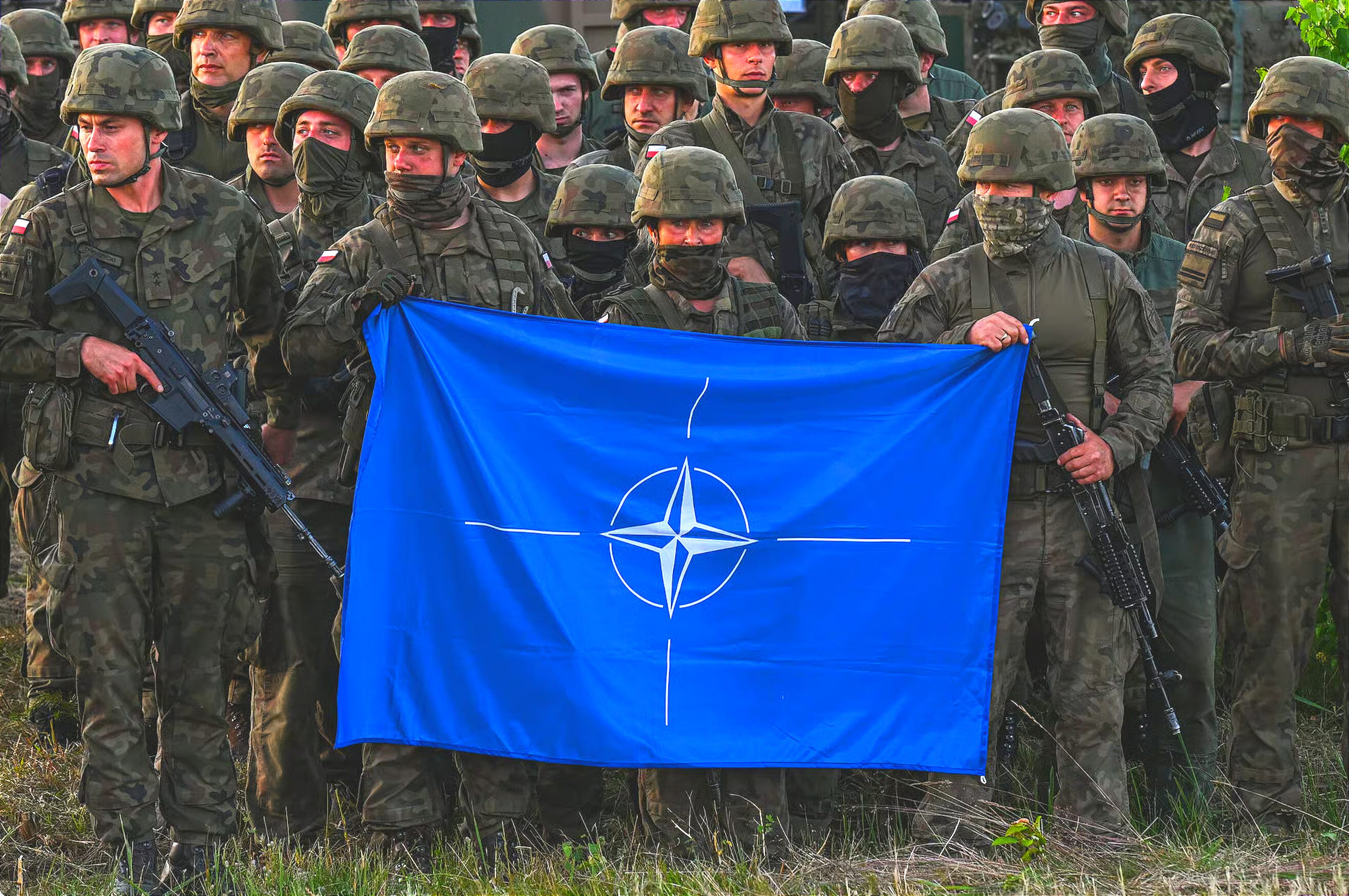
The German Kiel Institute has published a study at a strikingly opportune moment, boiling down to a simple conclusion:
When countries strengthen their armed forces - whether due to a direct conflict or the threat of war - they follow a stable historical trajectory of financing that affects taxation and debt burdens over the long term.
The researchers even identified a “clear recurring pattern,” which, without a shadow of a doubt, sends a message to Europe’s population: debt, taxes, tariffs, and related problems are here to stay.

For the past 3 years, Europeans have been told a comforting story. Yes, military budgets are rising. Yes, defence spending is being “reprioritised.” But no, this is not permanent. It is an emergency response to extraordinary times — a short detour before a return to normal.
The Kiel Institute for the World Economy has just demolished that narrative and shared blunt conclusions: when states rearm (whether because war has arrived or because it feels uncomfortably close), they follow a remarkably stable financial trajectory - first comes debt, then come taxes. And neither truly goes away. Over the past several months, I discussed the effects of Germany’s rearmament initiatives here, here, here, and here.
Christoph Trebesch, Director of the Institute’s Research Center for International Finance, puts it plainly:
“Today’s NATO rearmament is among the largest the industrialised West has seen in 150 years, comparable to the build-ups before the world wars or after the Korean War. History suggests this will not be absorbed quietly. It will sit on taxpayers’ shoulders for decades.”
The pattern, of course, is clear and recurring. At the outset of major military expansions, governments borrow aggressively. Public debt balloons as the sense of urgency trumps any remaining fiscal restraint. However, heavy borrowing is rarely the answer, and once the initial shock passes, states reach for a more permanent tool: taxation.
New taxes are introduced. Existing rates are raised. Temporary measures become permanent fixtures. Crucially, the study finds that these changes are rarely reversed. Even 10 years after military spending peaks, tax revenues remain 20–30% higher than they were at the start. That appears to be the floor, not the ceiling.
This is where the Kiel Institute’s work becomes politically explosive, even though it obviously seeks to avoid political language. As I’ve mentioned so many times before, what Europe is experiencing is not a short-term “guns instead of butter” moment. It is a structural shift in how economies are organised and financed. Europe is militarizing its economies and, to achieve political goals, debt will be supplemented by higher taxes.
Mainstream media typically frames defence spending as exceptional: a one-off response to a looming threat. The study by the Kiel Institute decisively ends that illusion. Rearmament rewires the system itself; it is not a “one-off” policy that is reversed within a short period of time.
Debt becomes normalised. Higher taxation, despite the public’s outcry, becomes embedded. Tariffs, fiscal pressure, and trade-offs stop being crisis tools and start becoming “normal”.
Perhaps most telling is what the Kiel Institute does not discuss. It does not ask whether this rearmament is wise, necessary, or avoidable. In Western Europe, that debate is officially over. The only remaining question is implementation - that is still open to partial debate, although the options are notoriously limited. How the costs are distributed, how quickly they are introduced, and how they are explained to the public - these details are to be announced in due time.
In that sense, the study is less an academic exercise than a signal. Europe is being prepared - both psychologically and fiscally - for a future in which an armed conflict, a war, is no longer regarded as an exception, but as a credible possibility.
The Kiel Institute has simply done what policymakers never do in public: the research said the quiet part out loud - with higher debt levels, expect higher taxes. This is not a temporary sacrifice; this is a new baseline.
Thank you for being a part of this community! Please consider becoming a paid subscriber to continue supporting my work.
And with it, come the inevitable unrest as the people start protesting the higher taxes. Governments topple and worse ones take over. The cycle keeps repeating itself over and over again.
The new model taking shape with BRICS is looking better for the people, but for those nation states that aren't part of that club, especially Trump's United States, they will also inevitably resort to violence as they refuse to change their hegemonic policies. Venezuela comes to mind right now, but eastern Ukraine and Palestine are also good examples. This is what you get when nation states decide that might makes right. NATO started the proxy war in the Donbass region, Israel has been at war in Palestine since 1948. The U.S. has been trying to dominate Latin America since Teddy Roosevelt was president, not to mention their attempts at dominating other parts of the world, with little success over the years. WWII was an accident of geography for the U.S., which is why they came out on top at the end. If the Axis powers had invaded north America, things would have turned out much different.
When countries lose their economic dominance, they cast about to try to dominate in other areas. Military adventures are about all they have left. The US is also in this camp. The Military Industrial Complex gets everything they ask for and often more from a compliant Congress and President.