


The Shock Heard Around the World
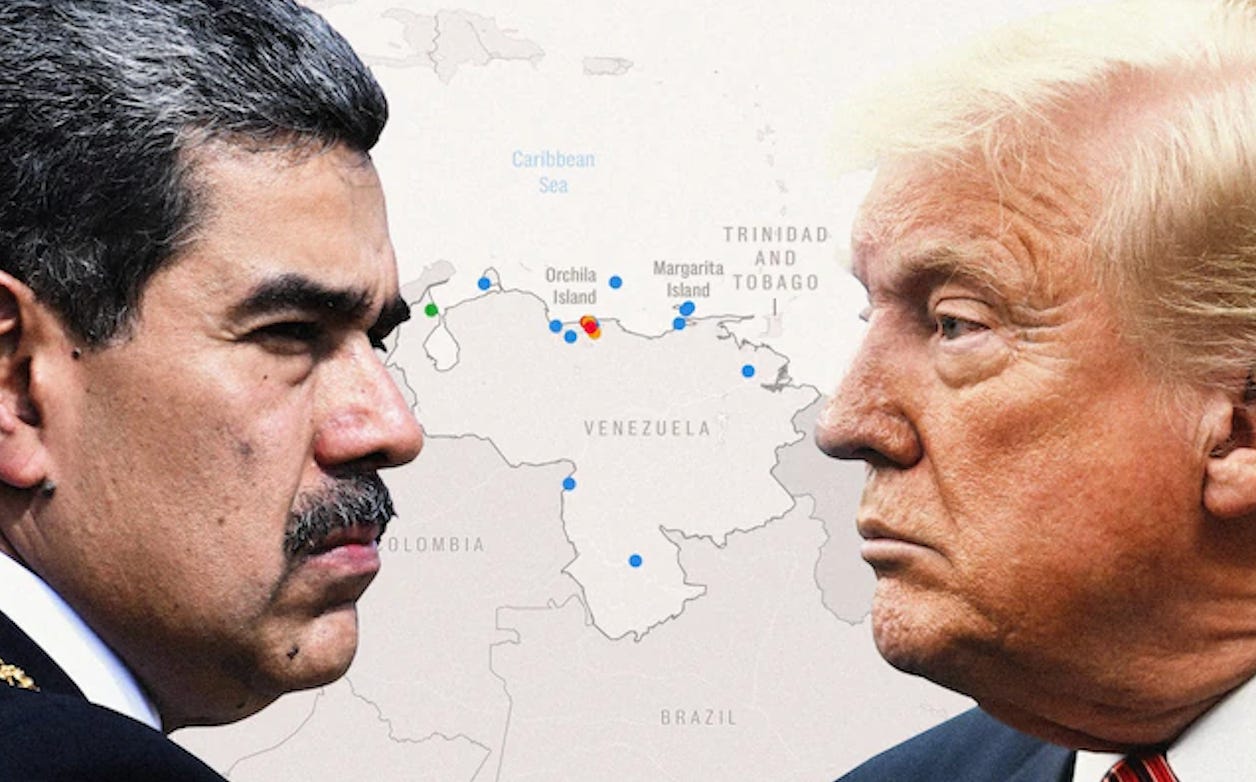
On January 3, the United States carried out a direct act of aggression against a sovereign, neighboring country: Venezuela. President Nicolás Maduro and his wife were abducted, Caracas was struck, and U.S. aircraft operated freely over the Venezuelan capital.
What made the operation even more alarming was not just its scale, but its silence. Not a single shot was fired in defense of the Venezuelan president. The country’s security apparatus appeared either paralyzed or complicit. These unanswered questions matter because they point to something far larger than a single military operation. They suggest coordination, internal facilitation, and a carefully planned regime-change event rather than a spontaneous act of force.
This was not chaos. It was choreography.
The Real Objective: Cutting Venezuela Away from China and Russia
Washington’s strategic goals are neither hidden nor ambiguous. Venezuela is to be severed from China and Russia and pulled firmly into the U.S. sphere of control. The prize is not ideology or democracy. It is resources - on a scale that reshapes global power.
Venezuela holds the largest proven oil reserves on Earth: roughly 300 billion barrels. At current prices, that oil alone is worth approximately $17 trillion, more than the entire GDP of Japan. Donald Trump himself has openly stated that the United States is now “running Venezuela,” with major U.S. oil companies preparing to move in.
Clearly, this is not an intervention. It is colonization - modernized, corporate, and unapologetic.
After consolidating influence in Guyana, Washington is now positioned to oversee approximately half of the world’s crude oil reserves. This has nothing to do with energy security. It is geopolitical leverage of the highest order.
The Myth of Regime Change and the Reality of Ruin
History has already told us what regime change brings - and it is not democracy.
Libya stands as a warning carved into the ruins of a once-functional North African state. After NATO’s intervention and the brutal assassination of Gaddafi, Libya descended into chaos, civil war, and open slave markets. What had been one of Africa’s more prosperous countries became a failed state. Ukraine is a recent example of how US foreign policy creates violence, chaos, suffering, and death.
Regime change does not deliver peace. It delivers fragmentation, violence, and long-term instability. Venezuela is now being pushed down the same path, not because it failed, but because it resisted submission. Maduro did not leave, and did not go into exile as the Trump Administration allegedly suggested.
Venezuela Is the Opening Move, Not the Endgame
The assault on Venezuela is not an isolated event. It is part of a broader imperial offensive across Latin America. What we are witnessing is the revival of an old logic (ie, imperial control) that has been updated for a new era of global confrontation in a global order that is no longer unipolar. As the US is losing control while multiple centers of power emerge, aggressive and lawless acts are to be expected.
After Venezuela, the next targets are clear: Nicaragua and Cuba. Beyond the region, Iran increasingly appears in Washington’s crosshairs as well. Regime change is no longer an occasional tactic of U.S. foreign policy. It is the policy.
US Secretary of State, Marco Rubio, stated on January 5th:
“I don’t care what the UN says. The UN doesn’t know what they’re talking about.”
The objective is simple: install obedient puppet governments that will sell off national assets to Wall Street and align unconditionally with Washington’s strategic interests.
Oil as Power: The True Foundation of U.S. Control
The transformation of Venezuela’s political landscape has only just begun, but its direction is unmistakable. The foundation of U.S. control is oil - and I don’t mean oil as quick profit, but oil as power.
Oil underpins military strength, industrial capacity, and geopolitical influence. Trump himself made this clear when he said that U.S. corporations would invest billions to rebuild Venezuela’s oil infrastructure. That statement reveals everything. This is not about immediate extraction. It is about long-term domination.
Even if U.S. influence weakens in parts of the Eastern Hemisphere, control over virtually unlimited oil resources enables future aggression against sovereign states - from Iran to beyond. Oil becomes the lever that can be pulled at precisely the right moment.
