


"History never ends, and the last page is never written, and the best pages are written not by presidents, prime ministers, popes, or even professors, but by the people. For all their faults and shortcomings, the people are all we have. In fact, we are they,” Michael Parenti.
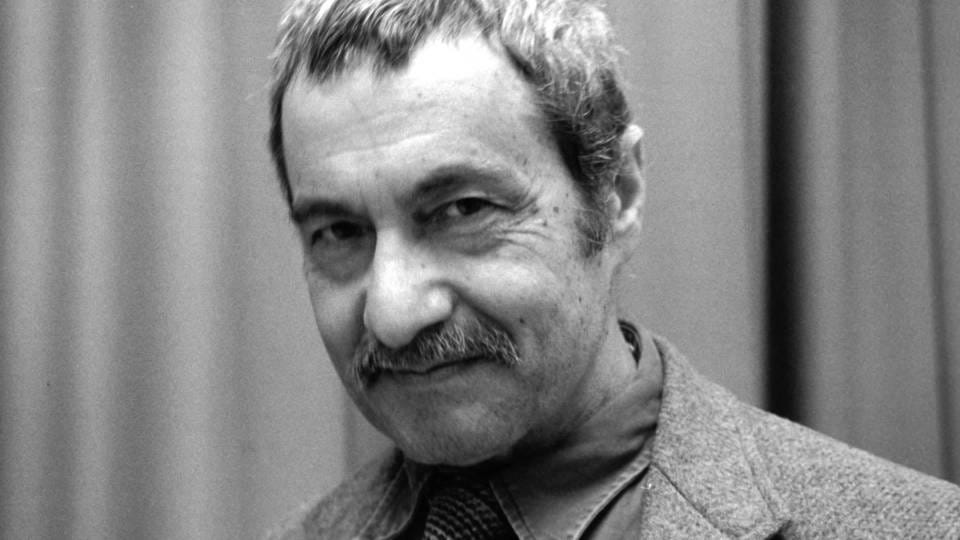
Dr. Michael Parenti (1933-2026) was more than a Marxist political scientist, public intellectual, and author — he was a clarity machine in an age of confusion. I remember discovering his lecture for the first time years ago, and spending the next 3 hours watching several more. In his decades as an independent voice outside the academy’s power centers, Parenti taught generations how to see what power hides and how to ask questions that the powerful would rather suppress. His death in January 2026 marks the end of an era of fearless critique — but also the enduring start of a legacy that will be studied and celebrated for decades to come.
The “Yellow Parenti” lecture, which I am uploading in full to this post, is worth watching and returning to. Dr. Parenti wrote more than 20 books and many articles, many of which can be accessed here: The Michael Parenti Political Archive.
Imperialism as Structure, Not an Error
One of Parenti’s most defining contributions was his insistence that imperialism is not a historical accident or the occasional misstep of powerful states — it is a structural feature of modern capitalism. Drawing on historical patterns going back centuries, he showed how powerful nations (especially the United States and its Western allies) leverage economic, military, and political power not in the name of freedom, but profit, resources, and dominance. Sounds familiar, doesn’t it?
In the so‑called “Yellow Parenti” lecture, this insight took center stage. His articulation that the Global South is not inherently poor — it was made poor through centuries of expropriation — challenged the most basic narratives we are fed about “development” and “progress.” Personally, I thought he put into simple words what we try to say but, somehow, fail to articulate so clearly. Wealth in these nations didn’t vanish because of some natural deficiency; it was extracted through empire and global capital flows.
Democracy Under Capitalism: Promise and Betrayal
Parenti did not dismiss democracy — he highlighted its contradictions. In works like Democracy for the Few and in his lectures, he made the simple yet revolutionary point that elections and formal freedoms exist, but power in capitalist societies is structurally weighted toward elites. What looks like democracy in textbooks is, in fact, democracy constrained: real power clings to wealth, lobbyists, and institutional privilege.
His message was very straightforward: democracy advances only when movements from below push it forward, and it retreats when elites feel threatened. This tension between promise and betrayal was a heartbeat of Parenti’s work — and a vital lesson for anyone who still believes that justice can be achieved without engagement.

The Media as a Machine of Selective Truth
Decades before terms like “algorithmic bias” or “platform capitalism” became common, Parenti was already dissecting how news media produce consent through selection, framing, and omission. In Inventing Reality and in many of his lectures, he argued that bias isn’t only about lies — it’s about what never gets said, which voices get amplified, and whose suffering gets humanized. Now, these ideas are extremely relevant as they help put current events in perspective.
This insight has only become more urgent as media platforms have tightened their grip on public discourse. Parenti taught that the media isn’t just a mirror of society — it’s a projector of elite interests.
Class, Capital, Crisis
Against the comforting myth that capitalism creates widespread prosperity, Parenti relentlessly argued that great wealth and deep poverty are not opposites but interconnected outcomes of the same system. In his analyses of capital flows, global labor exploitation, and economic mythology, he reminded us that the system’s benefits accrue to a tiny elite while its burdens weigh on billions.
His critiques of the myths of “universal prosperity” and “equal opportunity” were calls to see how real systems operate: to uncover the deep structural realities that conventional narratives hide.
Courage — Intellectual, Moral, and Public
Michael Parenti’s path was not that of a traditional academic. He knew that the study of politics is itself political, and that claiming neutrality is often the most effective cover for defending the status quo. Instead, he chose independence over and over again: he enjoyed speaking in community halls and building an audience outside Western academia.
This choice cost him professionally, but it amplified his impact. Parenti didn’t just critique power — he became a symbol of resistance to it.
Michael Parenti leaves behind a body of work defined by clarity, courage, and compassion for those rendered invisible by dominant narratives. His insights into empire, power, media, and democracy will continue to educate activists, students, scholars, and anyone seeking to understand not just what is, but why it is so.
As we remember him, may we carry forward his fundamental lesson: to look deeper, ask harder questions, and refuse simplistic explanations in the face of complexity. Parenti didn’t just explain the world — he challenged us to change it.
Rest in power, Michael Parenti.
If you value thoughtful independent analysis that goes beyond the headlines, joining the community as a paid subscriber is the best way to support this work. Your subscription helps me publish more regularly and expand the scope of my work. As a paid member, you’ll get exclusive essays, early access to posts, and direct opportunities to engage with ideas that challenge conventional thinking via the subscribers-only chat — all while helping sustain independent journalism that matters.


